Step confidently into one of the fastest-growing sectors of the economy with Brookline College’s online Allied Health degree program, designed to prepare you for meaningful, in-demand roles within today’s healthcare system. This career-focused program provides a strong foundation in essential business and healthcare disciplines, including accounting, finance, marketing, and professional communications, equipping you to support the operational backbone of healthcare organizations while helping manage vital health information and uphold the quality and security of patient care. As healthcare continues to outpace nearly every other industry in job growth, an Allied Health degree offers both long-term stability and the opportunity to make a lasting impact behind the scenes. Delivered 100 percent online, the program is built for flexibility, allowing you to balance school with work and life commitments while progressing at a focused pace. With a streamlined curriculum, you can earn your Associate Degree in Allied Health in as little as 40 weeks and move forward with confidence into a purpose-driven healthcare career.
ONLINE FLEXIBILITY
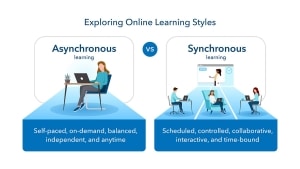
Learn on your terms with a fully online program designed to fit into your life. Balance coursework alongside work and personal commitments while accessing your education anytime, from anywhere.
40-WEEK ACCELERATED PROGRAM
Complete your training in as few as 40 weeks and take the next step toward a fast-moving, in-demand healthcare career.
CAREER-FOCUSED TRAINING
Allied Health Graduate Placement Rate
75%*
View all
Enroll before our next start date
Ready to take the next step towards a rewarding career in healthcare? Ready to move forward? If you’re interested in enrolling in our online Allied Health program or would like more information, submit a request form today. A member of our admissions team will reach out to answer your questions, walk you through the application process, and help you prepare for the upcoming start date.
Enroll in our Allied Health program before the next start date.
Enroll Today
If you wish to apply or learn more about our online Allied Health program, submit a request form today and our admissions team will contact you shortly.
Submit a copy of a government-issued ID and proof of high school diploma/GED
Submit transcripts from your diploma
Complete FAFSA and financial aid appointment
Start classes
Allied Health Curriculum (61.5 Credits*)
This curriculum is designed to build the practical skills needed to support healthcare operations, manage health information, and contribute effectively within a variety of healthcare settings.
Course Totals
61.5Credit hours
Course
Credit Hours
Block Transfer — Allied Health Diploma
24.5
HA206 Introduction to Health Care Accounting
3
HA207 Health Care Finance
3
HA211 Health Care Marketing and Customer Service
3
HA220 Interpersonal Communications in Health Care
3
Course
Credit Hours
SS100 Student Success
3
MCT100 Medical Terminology
1
EN144 English Composition
3
MH140 College Mathematics
3
SO170 Introduction to Sociology
3
CO415 Multicultural Communications
3
PD299 Professional Development
3
PS135 Introduction to Psychology
3
BI165 Introduction to Biology
3
Accelerated Training
The Allied Health program is designed for students who want to move forward with focus and intention. Through a streamlined, accelerated curriculum, you’ll build a strong foundation in healthcare operations, business principles, and health information management—developing practical skills that support efficiency, accuracy, and patient-centered care across healthcare settings.
Tuition and Financial Guidance
Tuition costs for the Allied Health program vary based on individual circumstances, including location and financial eligibility. Brookline College offers a range of financial aid options to qualifying students, with more than 80 percent of students using some form of assistance. Dedicated Student Financial Representatives provide personalized guidance to help you understand your options and plan a path forward that aligns with your goals.
Career-Ready Experience
Allied Health professionals play an essential role behind the scenes, and your training reflects that responsibility. Through applied coursework and real-world scenarios, you’ll gain practical experience supporting healthcare operations, managing critical information, and collaborating with care teams—preparing you to step confidently into entry-level roles across a variety of healthcare environments.
A Career as an Allied Health Professional
A career in Allied Health offers the opportunity to play an essential role in today’s healthcare system by organizing, managing, and safeguarding health information that supports accurate clinical decisions and quality patient care. According to the BLS, Allied Healthcare professionals are categorized under Health Information Technologists and Medical Registrars and earn a mean annual wage of $73,410*. Earnings and job outlook may vary based on location, experience, and employer, and reported wage data may not reflect entry-level positions.
In addition, the BLS reports that employment across health information–related roles is projected to grow 15 percent from 2024 to 2034, much faster than the average for all occupations. An associate degree in Allied Health can provide a stable entry point into this growing field, with the potential to pursue advanced responsibilities or leadership roles through continued education and experience.
Tuition for the Allied Health program varies based on individual enrollment details, such as location and financial eligibility. Before you begin, your Admissions Representative will review tuition, estimated fees, and available financial aid options so you can plan with confidence.
Students who qualify may be eligible for federal grants, student loans, scholarships, and other funding opportunities. Our Financial Aid team works closely with you to explain your options and provide guidance throughout the process.
Yes. Flexible payment plan options may be available to help make the cost of your education more manageable.
We recommend completing the FAFSA as early as possible to help maximize access to available funding.
Transfer credits from accredited institutions may be accepted following an official transcript review.
Submit your official transcripts during the admissions process. Your Admissions Representative will review them with you and explain any eligible transfer credits.
In some cases, credits from Eagle Gate College or other Unitek Learning institutions may transfer, depending on course equivalency and program alignment.
Applicants must provide proof of high school graduation or equivalent, complete required admissions assessments, and meet program-specific requirements. Our Admissions team will guide you through each step.
No prior healthcare experience is required. The program is designed to build foundational knowledge and professional skills for entry-level roles in healthcare support and administration.
Application fees vary by campus. Your Admissions Representative can provide the most current information.
Students have access to tutoring, academic advising, career services, and student success resources throughout the program.
Allied Health professionals support healthcare organizations by managing health information, coordinating administrative processes, and contributing to the accuracy, security, and efficiency of patient care operations.
Graduates may pursue entry-level roles in hospitals, clinics, physician offices, insurance organizations, and other healthcare-related settings.
According to the BLS, employment across health information–related roles is projected to grow 15 percent from 2024 to 2034, much faster than the average for all occupations. Job outlook may vary based on location, experience, and employer, and reported wage data may not reflect entry-level positions.
According to the BLS, Allied Healthcare professionals are categorized under Health Information Technologists and Medical Registrars and earn a mean annual wage of $73,410*. Earnings may vary based on location, experience, and employer, and reported wage data may not reflect entry-level positions.
Tuition for the Allied Health program varies based on individual enrollment details, such as location and financial eligibility. Before you begin, your Admissions Representative will review tuition, estimated fees, and available financial aid options so you can plan with confidence.
Students who qualify may be eligible for federal grants, student loans, scholarships, and other funding opportunities. Our Financial Aid team works closely with you to explain your options and provide guidance throughout the process.
Yes. Flexible payment plan options may be available to help make the cost of your education more manageable.
We recommend completing the FAFSA as early as possible to help maximize access to available funding.
Transfer credits from accredited institutions may be accepted following an official transcript review.
Submit your official transcripts during the admissions process. Your Admissions Representative will review them with you and explain any eligible transfer credits.
In some cases, credits from Eagle Gate College or other Unitek Learning institutions may transfer, depending on course equivalency and program alignment.
Applicants must provide proof of high school graduation or equivalent, complete required admissions assessments, and meet program-specific requirements. Our Admissions team will guide you through each step.
No prior healthcare experience is required. The program is designed to build foundational knowledge and professional skills for entry-level roles in healthcare support and administration.
Application fees vary by campus. Your Admissions Representative can provide the most current information.
Students have access to tutoring, academic advising, career services, and student success resources throughout the program.
Allied Health professionals support healthcare organizations by managing health information, coordinating administrative processes, and contributing to the accuracy, security, and efficiency of patient care operations.
Graduates may pursue entry-level roles in hospitals, clinics, physician offices, insurance organizations, and other healthcare-related settings.
According to the BLS, employment across health information–related roles is projected to grow 15 percent from 2024 to 2034, much faster than the average for all occupations. Job outlook may vary based on location, experience, and employer, and reported wage data may not reflect entry-level positions.
According to the BLS, Allied Healthcare professionals are categorized under Health Information Technologists and Medical Registrars and earn a mean annual wage of $73,410*. Earnings may vary based on location, experience, and employer, and reported wage data may not reflect entry-level positions.
*These placement rates are based on program-specific and campus-specific data reported to our institutional accreditor(s) in 2024. While the figures shown here are not separately reported to our accreditor, they are derived from those outcomes. For full details by program and campus, please visit our Disclosures page.
*Please note that wage data provided by the Bureau of Labor Statistics (BLS) or other third-party sources may not be an accurate reflection of all areas of the country, may not account for the employees’ years of experience, and may not reflect the wages or outlook of entry-level employees, such as graduates of our program (accessed on 3/17/2026).