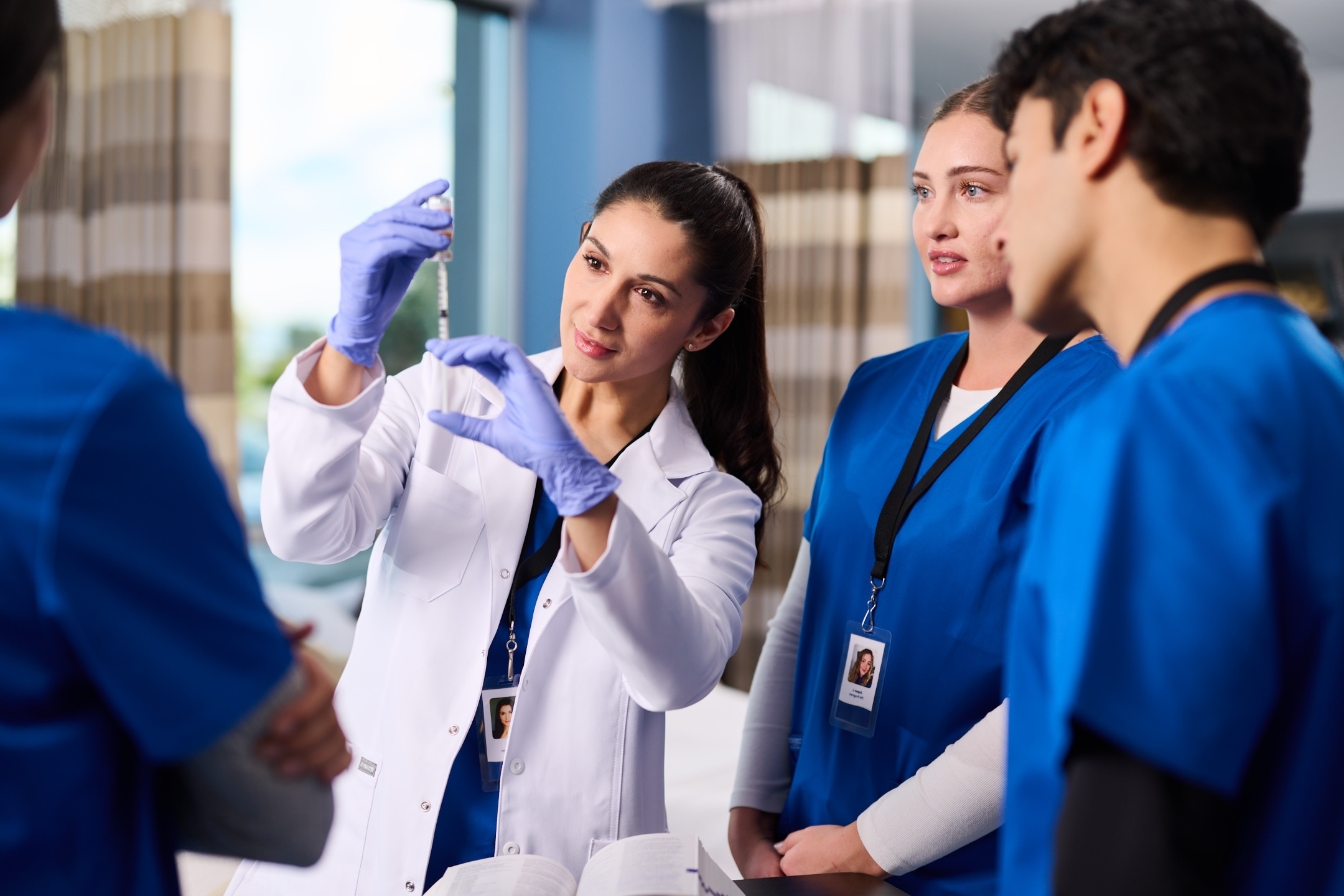
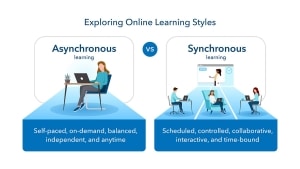
At Brookline College, the Accelerated BSN program track is built to fast-track your transition, moving you directly into nursing core courses and allowing you to complete your degree in as little as 16 months. Guided by Caritas-informed care, the curriculum emphasizes empathy, human connection, and evidence-based clinical practice. The first four semesters are delivered online in an asynchronous format, offering flexibility as you complete foundational coursework. General education courses start every eight weeks, while core nursing courses follow an annual cohort structure. Clinical rotations in real-world healthcare environments are reinforced by hands-on training in campus skills labs, advanced simulation experiences, and virtual reality learning tools. Upon graduation, students are prepared to sit for the NCLEX-RN and transition confidently into professional practice.
NCLEX PASSING ASSISTANCE
2024 NCLEX-RN Pass Rate 87.14% Source: Arizona Board of Nursing and New Mexico Board of Nursing
PLACEMENT RATE
Graduate Placement Rate 90%* Note: Contains combined program data
ACCREDITED BSN PROGRAM.
Graduate Placement Rate
90%*
View all
Enroll in our Accelerated Bachelor of Science in Nursing track before the next start date.
Albuquerque, NM
303 Roma Ave NW 3rd Floor, Suite 300
Albuquerque, NM 87102
Ideal for first-time college students seeking a direct route to RN licensure. Build a strong foundation in nursing theory, clinical practice, and compassionate patient care while earning your first degree in nursing.
Designed for students who already hold a non-nursing bachelor’s degree and want to transition into a nursing career sooner. This fast-paced program blends online learning with hands-on clinical experience, allowing you to earn your BSN in as little as 16 months.
How to apply to the ABSN track
Meet with admissions (virtual or in-person)
Begin enrollment process
Submit a copy of a government-issued ID and proof of high school diploma/GED
Submit any previous college transcripts for free evaluation
Take and pass the HESI entrance exam
Complete FAFSA and Financial Aid appointment
Start classes
Applicants to the Accelerated BSN program track must meet specific criteria beyond the standard admissions process below. To qualify, you’ll need either a bachelor’s degree in another field or at least 53 general education credits, including recent coursework in key sciences and math. You’ll also be required to pass the HESI entrance exam, with direct program acceptance granted upon admission.
ABSN Curriculum (67 Credits*)
Through a dynamic mix of online instruction, interactive simulation labs, and hands-on clinical experiences, you’ll develop the experience needed to provide high-quality, compassionate care in a wide range of healthcare environments. Over 67 semester hours, the curriculum covers essential topics including the principles of caring science, adult and pediatric health, maternal and newborn care, and the transition into professional nursing practice. When you complete the program, you’ll be prepared to take the NCLEX-RN exam and launch a meaningful nursing career focused on making a difference in the lives of others. Our curriculum integrates evidence-based practice, clinical judgment, leadership, and cultural competence—preparing you for a dynamic career in patient care.
Course Totals
67Credit hours
Course
Credit Hours
NRG200 – Pharmacology for Human Caring Nursing
3
NRG215 – Health Assessment for Human Caring Nursing
1
NRG225 – Fundamentals of Human Caring Nursing I
1
NRG225C – Fundamentals of Human Caring Nursing I Skills & Clinical
1
NRG230 – Fundamentals of Human Caring Nursing II
3
NRG230C – Fundamentals of Human Caring Nursing II Skills & Clinical
2
NRG130 – Nursing as a Human Caring Profession
3
NRG150 – Human Caring Nursing Seminar I
1
NRG260 – Adult Human Caring Nursing I
3
NRG260C – Adult Human Caring Nursing I Clinical
2
NRG290 – Adult Human Caring Nursing II
2
NRG291C – Adult Human Caring Nursing II Clinical
2
NRG245 – Mental Health Human Caring Nursing
3
NRG245C – Mental Health Human Caring Nursing Clinical
1
NRG315 – Maternal/Newborn Family Nursing
3
NRG315C – Maternal/Newborn Family Nursing Clinical
1
NRG275 – Nutrition for Human Health & Wellbeing
3
NRG330 – Pediatric Human Caring Nursing
3
NRG330C – Pediatric Human Caring Nursing Clinical
1
NRG250 – Human Caring Nursing Seminar II
1
NRG285 – Information Technology for Human Caring Nursing
2
NRG430 – Complex Health Human Caring Nursing I
2
NRG431C – Complex Health Human Caring Nursing I Clinical
2
NRG350 – Human Caring Nursing Seminar III
1
NRG376 – Evidence Informed Practice for Human Caring Nursing
2
NRG445 – Complex Health Human Caring Nursing II
2
NRG446C – Complex Health Human Caring Nursing II Clinical
2
NRG416 – Community Health Human Caring Nursing
2
NRG475 – BSN Transition to Practice
3
NRG475C – BSN Transition to Practice Clinical
2
NRG461 – Leadership & Management for Human Caring Nursing
2
NRG490 – BSN Human Caring Nursing Capstone
3
NRG490C – BSN Human Caring Nursing Capstone Clinical
2
Hearing from students about their externship days is the highlight of my time here. Their progress and stories bring immense pride and joy.
Pamela H.Brookline College Graduate
Accelerate toward NCLEX Exam success
The ABSN track includes dedicated NCLEX-RN preparation from the start, with targeted coaching, study tools, and simulated testing. Our focused approach helps students transition from classroom to licensure quickly and confidently.
Apply your learning through clinical rotations
Fast-track your hands-on experience by working directly with patients in hospitals and community health facilities. Each rotation is designed to strengthen your clinical judgment, leadership, and readiness to practice as a Registered Nurse.
Advance your skills in simulation and skills labs
Our immersive simulation labs provide realistic, scenario-based training led by experienced instructors. You’ll refine your techniques, critical thinking, and collaboration skills in a supportive learning environment.
Find financial solutions for your second degree
If you already hold a bachelor’s degree, you may qualify for additional tuition assistance or credit transfer. Our Financial Aid counselors can help you explore all available resources to make your ABSN journey more affordable.
Frequently Asked Questions
Tuition varies by campus and track. Your admissions representative can provide an exact cost estimate and explain available financial aid options before you apply.
For those who qualify, Brookline College offers federal grants, student loans, and scholarship opportunities. Our Financial Aid counselors will help you develop a personalized plan that fits your circumstances.
Yes. We offer flexible payment options to help make your accelerated nursing education more affordable.
Our team provides financial counseling, academic support, and career placement services to help you stay on track from enrollment to graduation.
We recommend submitting your FAFSA as soon as possible after you apply to secure your eligibility for available funding before your program start date.
Yes. The ABSN program track may accept transfer credits from accredited institutions for applicable general education and prerequisite courses.
That’s perfect—you meet one of the core requirements for admission. You may also receive credit for eligible prerequisite courses completed as part of your prior degree.
Send your official transcripts for a free evaluation. Our admissions team will review them and confirm which credits apply to your ABSN requirements.
Yes. Credits from other Unitek Learning schools may transfer if they meet program equivalency standards and course criteria.
Not at all. Our LPN to BSN pathway is designed for Licensed Practical Nurses who want to take the next step. You may receive credit for previous coursework and experience, saving both time and money as you work toward becoming a Registered Nurse.
Applicants must show proof of a non-nursing bachelor’s degree or at least 53 college credits, meet minimum HESI exam scores, and pass both a background check and drug screening before starting clinicals.
No healthcare experience is required. The ABSN track is designed for motivated students ready to transition into nursing from another field.
Application fees vary by location. Your Admissions Advisor will provide details as part of the application process.
The ABSN program track follows a hybrid model, combining online coursework with in-person labs and clinical rotations for hands-on experience.
ABSN students receive individualized academic coaching and tutoring from experienced faculty across courses such as Pharmacology, Medical-Surgical, Pediatrics, and Leadership.
A Bachelor of Science in Nursing (BSN) is a professional degree that qualifies you for RN licensure and prepares you for advanced roles in patient care and healthcare leadership.
A BSN provides an accelerated path to nursing practice for students with a prior degree, allowing for greater career mobility, earning potential, and advancement.
You’ll participate in supervised rotations across hospitals, clinics, and community health sites, building real-world experience in direct patient care.
With a BSN, you’ll qualify for RN licensure and can pursue roles in hospital care, public health, education, or specialty units such as ICU or maternity.
A Registered Nurse (RN) is a licensed healthcare professional, while a Bachelor of Science in Nursing (BSN) is the degree that qualifies you to take the licensing exam. The BSN provides the academic and clinical foundation for career advancement and leadership.
An ADN is generally a two-year associate degree, while a BSN is a more comprehensive program that takes about three to four years. The BSN includes additional coursework in research, community health, and management, ideal for long-term career growth.
Our accelerated curriculum integrates NCLEX preparation into every stage of learning. Through ATI practice exams, simulation labs, and focused faculty support, you’ll build the confidence and knowledge to succeed on the licensing exam.
According to the BLS, employment for Registered Nurses is projected to grow 5 percent from 2024 to 2034, faster than average for all occupations.
Yes. BSN-prepared nurses generally have higher earning potential and more opportunities for advancement compared to those with an associate degree. According to NursingProcess.org, the average salary of an RN with an associate degree is $80,660, while the average salary for a BSN holder is $92,560 per year. Salaries can vary depending on healthcare setting, geographic location, level of experience, and certifications.
Students participate in structured, scaffolded learning that progresses in complexity throughout the program. Lectures are designed to build knowledge step by step, reinforcing core concepts before advancing to more complex clinical content. Coursework begins with nursing fundamentals and continues through:
Beginning Medical-Surgical Nursing
Obstetrics
Pediatrics
Mental Health
Advanced Medical-Surgical Nursing
Critical Care
These environments are designed to mirror real healthcare settings and support hands-on learning in a controlled, supportive environment. All ground campuses are equipped with:
Dedicated simulation centers
High-, mid-, and low-fidelity mannequins
Virtual reality (VR) technology
Hospital-style skills laboratories
Students primarily train using Laerdal mannequins, available in low-, mid-, and high-fidelity models. These tools allow students to safely practice and refine specific clinical skills before working with live patients.
Fidelity level refers to the sophistication of the mannequin’s electronic components and its ability to simulate realistic human responses such as breathing, heart sounds, and physiological changes. In addition to full-body mannequins, students practice with specialized task trainers, including:
IV arms
Chester Chest™ central line trainers
Partial-body mannequins
Foley catheter insertion models
Wound care and ostomy trainers
BSN skills labs are designed to mirror hospital environments and help students build technical proficiency in a realistic clinical setting. Students have access to medical headwalls with simulated oxygen and suction, electronic vital signs monitors, EKG machines, defibrillators, hospital beds, medication carts, IV poles with IV fluids and Foley kits, chest tubes, splints and slings, sterile gloves and wound care supplies, as well as wheelchairs and crutches.
Virtual reality is used as a supplemental simulation tool to enhance clinical education. Through VR, students can:
Enter immersive patient-care scenarios on demand
Perform assessments and take vital signs
Administer medications
Practice communication and critical thinking skills
VR allows students to experience clinical situations that may not arise during scheduled clinical rotations. It provides a safe environment to develop both technical and interpersonal skills before caring for live patients. Students receive audio, visual, and tactile feedback throughout the experience, helping reinforce learning and build confidence.
Several features distinguish this program. These elements are designed to support diverse student backgrounds while maintaining strong clinical preparation and workforce readiness.
Asynchronous didactic coursework in the nursing core, offering added flexibility while maintaining academic rigor
Integration of virtual reality simulation to enhance clinical preparation
Multiple pathways to earn a bachelor’s degree in nursing in two to three years, depending on prior education
Tuition varies by campus and track. Your admissions representative can provide an exact cost estimate and explain available financial aid options before you apply.
For those who qualify, Brookline College offers federal grants, student loans, and scholarship opportunities. Our Financial Aid counselors will help you develop a personalized plan that fits your circumstances.
Yes. We offer flexible payment options to help make your accelerated nursing education more affordable.
Our team provides financial counseling, academic support, and career placement services to help you stay on track from enrollment to graduation.
We recommend submitting your FAFSA as soon as possible after you apply to secure your eligibility for available funding before your program start date.
Yes. The ABSN program track may accept transfer credits from accredited institutions for applicable general education and prerequisite courses.
That’s perfect—you meet one of the core requirements for admission. You may also receive credit for eligible prerequisite courses completed as part of your prior degree.
Send your official transcripts for a free evaluation. Our admissions team will review them and confirm which credits apply to your ABSN requirements.
Yes. Credits from other Unitek Learning schools may transfer if they meet program equivalency standards and course criteria.
Not at all. Our LPN to BSN pathway is designed for Licensed Practical Nurses who want to take the next step. You may receive credit for previous coursework and experience, saving both time and money as you work toward becoming a Registered Nurse.
Applicants must show proof of a non-nursing bachelor’s degree or at least 53 college credits, meet minimum HESI exam scores, and pass both a background check and drug screening before starting clinicals.
No healthcare experience is required. The ABSN track is designed for motivated students ready to transition into nursing from another field.
Application fees vary by location. Your Admissions Advisor will provide details as part of the application process.
The ABSN program track follows a hybrid model, combining online coursework with in-person labs and clinical rotations for hands-on experience.
ABSN students receive individualized academic coaching and tutoring from experienced faculty across courses such as Pharmacology, Medical-Surgical, Pediatrics, and Leadership.
A Bachelor of Science in Nursing (BSN) is a professional degree that qualifies you for RN licensure and prepares you for advanced roles in patient care and healthcare leadership.
A BSN provides an accelerated path to nursing practice for students with a prior degree, allowing for greater career mobility, earning potential, and advancement.
You’ll participate in supervised rotations across hospitals, clinics, and community health sites, building real-world experience in direct patient care.
With a BSN, you’ll qualify for RN licensure and can pursue roles in hospital care, public health, education, or specialty units such as ICU or maternity.
A Registered Nurse (RN) is a licensed healthcare professional, while a Bachelor of Science in Nursing (BSN) is the degree that qualifies you to take the licensing exam. The BSN provides the academic and clinical foundation for career advancement and leadership.
An ADN is generally a two-year associate degree, while a BSN is a more comprehensive program that takes about three to four years. The BSN includes additional coursework in research, community health, and management, ideal for long-term career growth.
Our accelerated curriculum integrates NCLEX preparation into every stage of learning. Through ATI practice exams, simulation labs, and focused faculty support, you’ll build the confidence and knowledge to succeed on the licensing exam.
According to the BLS, employment for Registered Nurses is projected to grow 5 percent from 2024 to 2034, faster than average for all occupations.
Yes. BSN-prepared nurses generally have higher earning potential and more opportunities for advancement compared to those with an associate degree. According to NursingProcess.org, the average salary of an RN with an associate degree is $80,660, while the average salary for a BSN holder is $92,560 per year. Salaries can vary depending on healthcare setting, geographic location, level of experience, and certifications.
Students participate in structured, scaffolded learning that progresses in complexity throughout the program. Lectures are designed to build knowledge step by step, reinforcing core concepts before advancing to more complex clinical content. Coursework begins with nursing fundamentals and continues through:
Beginning Medical-Surgical Nursing
Obstetrics
Pediatrics
Mental Health
Advanced Medical-Surgical Nursing
Critical Care
These environments are designed to mirror real healthcare settings and support hands-on learning in a controlled, supportive environment. All ground campuses are equipped with:
Dedicated simulation centers
High-, mid-, and low-fidelity mannequins
Virtual reality (VR) technology
Hospital-style skills laboratories
Students primarily train using Laerdal mannequins, available in low-, mid-, and high-fidelity models. These tools allow students to safely practice and refine specific clinical skills before working with live patients.
Fidelity level refers to the sophistication of the mannequin’s electronic components and its ability to simulate realistic human responses such as breathing, heart sounds, and physiological changes. In addition to full-body mannequins, students practice with specialized task trainers, including:
IV arms
Chester Chest™ central line trainers
Partial-body mannequins
Foley catheter insertion models
Wound care and ostomy trainers
BSN skills labs are designed to mirror hospital environments and help students build technical proficiency in a realistic clinical setting. Students have access to medical headwalls with simulated oxygen and suction, electronic vital signs monitors, EKG machines, defibrillators, hospital beds, medication carts, IV poles with IV fluids and Foley kits, chest tubes, splints and slings, sterile gloves and wound care supplies, as well as wheelchairs and crutches.
Virtual reality is used as a supplemental simulation tool to enhance clinical education. Through VR, students can:
Enter immersive patient-care scenarios on demand
Perform assessments and take vital signs
Administer medications
Practice communication and critical thinking skills
VR allows students to experience clinical situations that may not arise during scheduled clinical rotations. It provides a safe environment to develop both technical and interpersonal skills before caring for live patients. Students receive audio, visual, and tactile feedback throughout the experience, helping reinforce learning and build confidence.
Several features distinguish this program. These elements are designed to support diverse student backgrounds while maintaining strong clinical preparation and workforce readiness.
Asynchronous didactic coursework in the nursing core, offering added flexibility while maintaining academic rigor
Integration of virtual reality simulation to enhance clinical preparation
Multiple pathways to earn a bachelor’s degree in nursing in two to three years, depending on prior education
Accreditation
The baccalaureate degree program in nursing at Brookline College is accredited by the Commission on Collegiate Nursing Education (http://www.ccneaccreditation.org)
*These placement rates are based on program-specific and campus-specific data reported to our institutional accreditor(s) in 2024. While the figures shown here are not separately reported to our accreditor, they are derived from those outcomes. For full details by program and campus, please visit our Disclosures page.
*Please note that wage data provided by the Bureau of Labor Statistics (BLS) or other third-party sources may not be an accurate reflection of all areas of the country, may not account for the employees’ years of experience, and may not reflect the wages or outlook of entry-level employees, such as graduates of our program (accessed on 3/16/2026).